

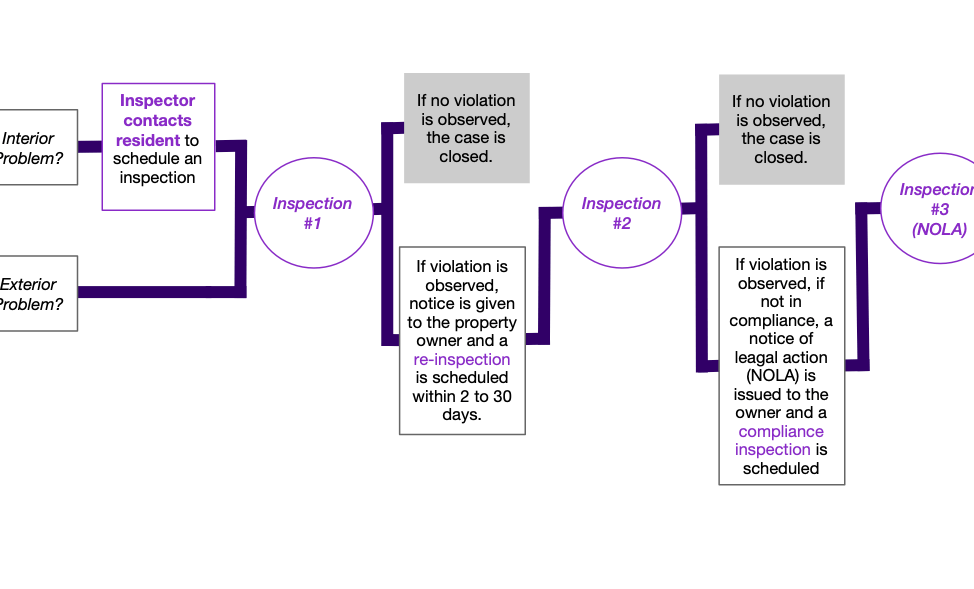
For the City of Evanston, the steps from Property Standards complaint through attempts at resolution are outlined on the City’s website:
For the City of Evanston’s description of the process, click here.
Currently, the process in Evanston is built with many opportunities for property owners to address compliance issues before a case is elevated to an Administrative Hearing and/or a possible fine, increasing the number of inspection visits that need to be scheduled/conducted.
The process as outlined on the City’s website shows a possible three (3) inspection visits before a complaint reaches the stage of an Administrative Hearing, and more inspections if the case needs to progress to the Circuit Court for compliance.
Delay in Property Standards violations being resolved (fine issued, re-inspection or dismissal of the case) can happen for many reasons. Here are some of them:
- Problems/delays in transferring complaints to inspectors;
- Inspectors’ inability to access the property for some interior or gated yard inspections;
- Inability to find/contact the property owner to inform them about the ticket/hearing;
- The property owner has passed away and property ownership is unresolved;
- Property Owner doesn’t respond or show up to Property Standards Hearing(s)
Without data about adjudication or potential follow-up inspections, it’s unclear as to the exact amount of time that lapses between when a violation occurrence date is entered and resolution, or which inspections accelerated the process because of the seriousness of their condition.
Using the data available (occurrence date and Property Docket dates), we can only approximate using the time between the recorded occurrence and the last known Property Docket date of a specific ticket.
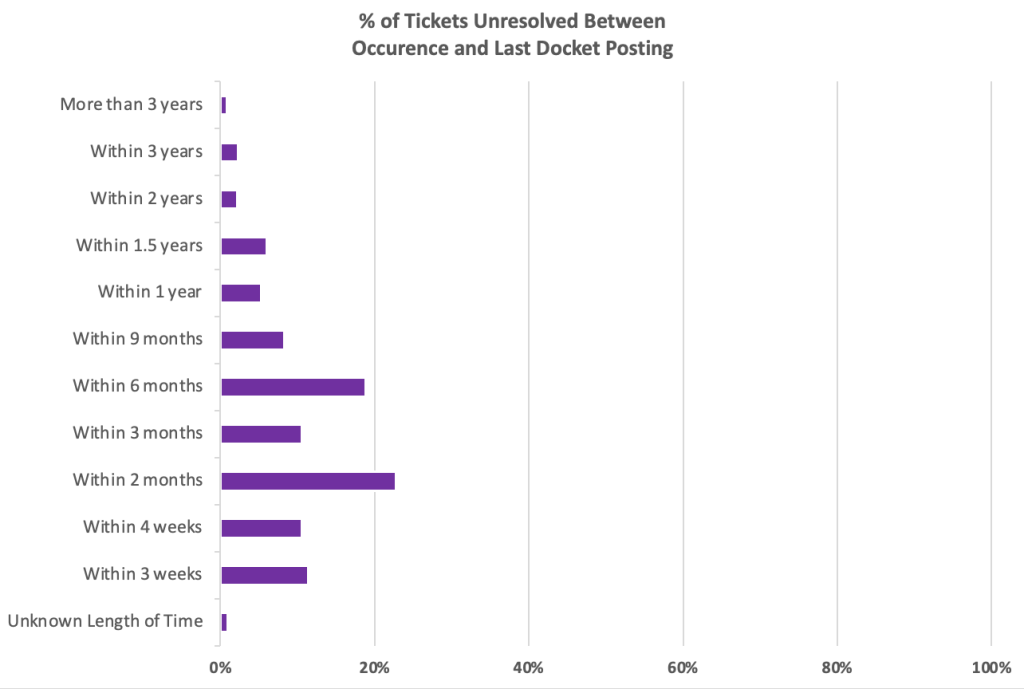
Source: Time Lapsed per Ticket, Jan 2013 through April 2022
We don’t know how many complaints and inspections are resolved before they get to the Property Docket, but we can see from those tickets that made it to the Property Docket between 2013 – early 2022 that ~55% of tickets that made it on to the docket exited from the docket (and are assumed resolved) within 3 months after the date of the first inspection.**
Furthermore, 32% of the tickets on Property Dockets during this time period** took between 3 months and 1 year to exit from the docket, and the remainder took more than a year (and in a few cases, over 2-3 years).
**We might have assumed that delays in the process during 2020-2021 due to COVID altered the data, and it did have an effect on the amount of time between violation inspection occurrence and the last docket date. However, before COVID, the process was a bit slower, with only 46% of tickets exiting the docket within 3 months from the first inspection. A further 36% exited the docket between 3 months and 1 year after the violation date. Approximately 16% took over a year (and as many as 3+) to exit the docket.
Why does the length of time between occurrences and resolution matter?
- For renters who are trying to have property matters resolved with their landlord, significant time lapses in the complaint process can prevent a resolution from happening for the renter before their lease has ended, especially in the case of student tenants who may be renting for a partial year.
- Delays in property owner response may cost the City more in time and expense (e.g. man-hours, multiple visits, administrative time). The extra steps and extra visits/engagement while seeking a resolution and accountability from the property owner could be costing more than the revenue earned by ticketing property owners who are not in compliance.
- Some property standards problems–such as conditions that can create rodent/insect infestations or start fires–can affect surrounding properties the longer they go unresolved.
For a summary of all blog posts regarding Property Violations, click here.
 Insight Evanston