
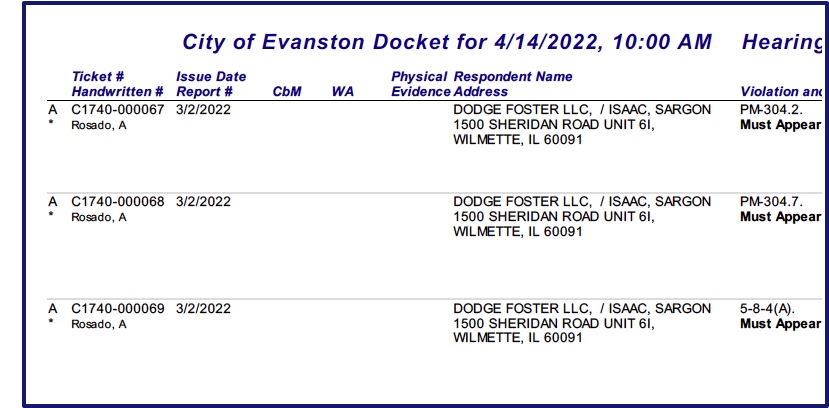
Property violations are relatively straightforward as the first experiment in opening and examining Evanston data because they are more easily available than a lot of data types. They have a purpose, geo-location, clearly-defined accountability relationship, timeline, and direct connection to the municipal policies.
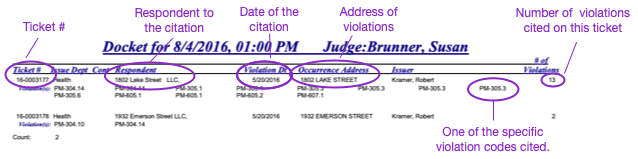
There are a few immediate problems with opening Evanston Property Violation data that are common across many municipalities:
- The Property Violation Docket data available online is for a shorter time period than it has been collected. In this case, Property Violation data available online without a Freedom of Information Act Request (FOIA) is from 1/10/13 (including some incidents that happened prior to this date but are still on the docket in January 2013).
- As it seems Property Violation Docket records are often generated weekly, it’s unclear as to whether the time periods that are missing are accidental/on purpose OR if there were not hearings conducted during those missing weeks.
- The format of data provided in the dockets changes over time, which requires manual work to align the data into a standard format.
- Specific data that would make this information meaningful to decision-making or reviewing policies is missing.
In order to make this data more “open” and meaningful, the first step is to transfer the data from a PDF format and into a spreadsheet or database for easier analysis.
City of Evanston Property Docket Data
There were multiple common problems related to this data generally that needed to be corrected, including the manual alignment of the data into a standard format. Some docket pages on the City of Evanston website were in inaccessible files (file would not open), were posted more than once, or were filed in the wrong folder.
For a view of all posts related to Property Violations data, click here.
 Insight Evanston